
Understanding Tooth Pain and What to Do When You Have It
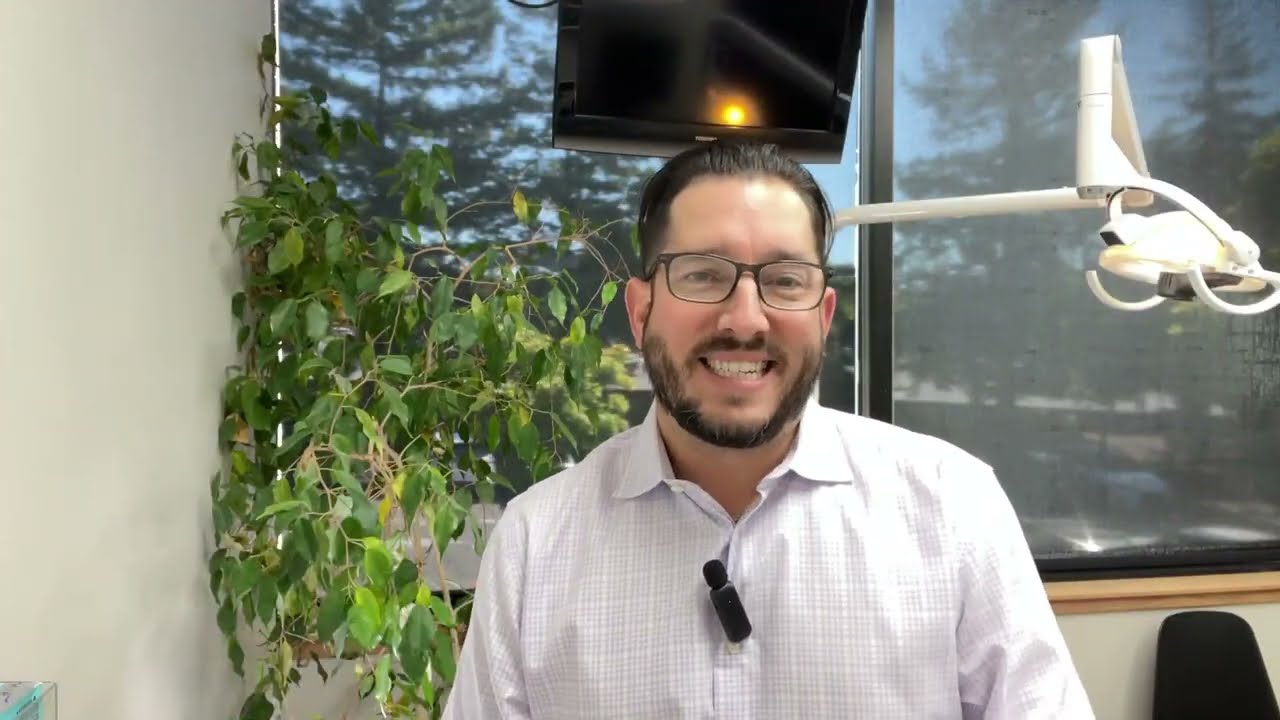
Hey, I'm Dr. Suess at Clackamas Smiles Family Dental in Happy Valley. We get a lot of questions about tooth pain, what causes it, what you can do about it at home if it's happening to you or a loved one, and what you should do next. How are you going to get this solved? And then how are you going to make that go away?
How can I make tooth pain stop fast?
The answer is, go see a dentist, right? That's kind of a joke, but it's true. Now, what are you going to do at home if you have tooth pain and can't get in right away? If it's safe for you to take, one of the best places to start is over-the-counter pain relievers. These pain relievers are really quite powerful. You don't always need a prescription for pain relief. The point is you want it gone. As long as it's safe for you to take this, and this isn't medical advice—you must see your dentist or doctor to ensure it's safe for you to take.
If it is, one of the most common ones we recommend for our patients is ibuprofen and Tylenol taken together. Mom always told us not to mix medicines, and I'm telling you the opposite. If it's safe for you and you've checked with your doctor and dentist, consider taking ibuprofen and Tylenol together—ibuprofen at around 400 to 600 milligrams, and Tylenol at 1000 milligrams. Watch for the maximum doses. I can't tell you frequencies; you must check with your dentist and doctor for that. But those two together are a powerful one-two punch, and it's a combo that works for many people. That can work on nerve pain, infection pain, and just standard cavity and tooth pain. The point is, you have something going on below the surface, and you have to find out what that is before you can solve it. That has to be solved before your pain goes away and stays away. This is just a band-aid.
What is the longest lasting cure for tooth pain?
The answer is you have to cure the root cause of what's happening. If this is a nerve that is malfunctioning and infected, causing the buildup of pus, which creates pressure, and pressure creates pain, you have to solve that. You have to drain the pus, stop the infection, and find a way to solve that.
If this is a nerve, think of it like the light in this light bulb that's going crazy. That nerve is sending all of those nerve signals. It may not be an infection, so it's not pressure or pus. That's not the pain pathway. The pain pathway is actually the electrical system within the tooth. That would be a different cause. The same treatment for an infection may not treat nerve pain.
Is it a cavity? Is it something inside the tooth impacting those nerve endings? That might still be fixable. In that case, the answer is a prompt removal of the cavity or decay, allowing that tooth to settle down on its own. That's something that can happen.
On the other hand, if this is a split, teeth are like solid pieces. They shouldn't have cracks or splits. If this is a split that has opened the tooth wide, there may not be a fix for that. In that case, the tooth being there is like a thorn in your paw. It needs to be removed to experience relief from your pain. Get dental care as soon as possible to find the real answer for what's going on. The sooner you fix the real answer, the sooner you'll get relief.
What are some common non-dental reasons for tooth pain?
We see this from time to time. People come in saying, "My tooth up here, it's aching. It's going crazy." We start to talk to them and find out they have a sinus issue. It could be a sinus infection, a blockage, or the buildup of mucus and pus, causing that tension-type headache and sinus headache. These things can make it feel like your tooth is going crazy, but in reality, it might be your sinuses referring pain down there. That's something we check out, and we can test tooth by tooth to find out if it's a sinus issue unrelated to tooth pain.
Another possibility is having a syndrome where your nerves are causing pain signals, but it didn't originate from the tooth. It might be from higher up, and that nerve is being irritated or sensitized, making it feel like the tooth is going crazy. It may not be a cavity, chip, crack, infection, or nerve-ending issue. It might not be the electrical system of that tooth. It could be the electrical system higher up. In those cases, doing something to the tooth won't fix it because that was never the problem. It might have been the sinus or the nerve bundle higher up.
We always check for these during appointments. It may not always be the tooth itself. That's what we look into when trying to find out if it's the tooth, infection, nerve, or something else that needs attention.
Why do I have constant throbbing tooth pain?
More often than not, that does come from the tooth. These can be hard to track down because they can come and go. It's like a roller coaster. Some days it's bad, some days it's not. It's not that bright, sparkly nerve pain, but more like a dull ache. Something's going on. You know it deep down.
These are troublesome because they can last for weeks or months. That kind of pain can be experienced long-term, but it can be difficult to track down. Especially if you're not certain what tooth it's coming from, it needs to be looked into. You need to do some surveillance at home and give us a good idea of which tooth it's coming from.
Describe what that pain feels like. It's dull, feels like an ache, like my tooth has a headache. It radiates out of this area. It's dull or sharp and feels more like nerve pain or more like an ache. Share that with us. The thing that drives dentists the most crazy is when you say, "Ah, it just hurts." And we ask, "What does it hurt like?" You say, "I don't know. It just hurts." That helps us not at all. Don't be that person. Use your brain. Start thinking. Start logging those symptoms. What caused it? What makes it better? What makes it worse? What does it feel like? Is it sharp? Is it dull? Is it all the time or sometimes? When does it come on? When is it better? What makes it better? What makes it worse?
All of those things can help us help you. When you sit down, you should be an expert at your pain. You're the only one who can feel it. Use your words. Let us know what's happening. Then we can help you find out what's causing it. Once we find out what's causing it, we can help you get rid of it. You're going to be our ally. You're going to be our helper. You're going to be our apprentice when it comes to finding that out. But you are the most important factor in us finding the right answer so we can solve it quickly to get you out of pain.
I have extreme pain. It's unbearable. My tooth is going crazy. It's blowing up. What do I do?
The answer is, go see an emergency dental clinic as soon as possible. They're not open. What do I do? Then you're going to the emergency room. I don't want to go to the emergency room. How bad does it hurt? If there's infection building up, if there's pus below the surface, if that can be drained or they can get you started on antibiotics, if it's appropriate for you, that might be your fastest route to getting that pain out of there.
In the most significant cases of tooth pain that I've seen, when the patient sits down, they're like, "I'll do anything. Just make it go away." That's when we know it's really serious. When we ask our patients, "Can you come in right away to have the tooth pain looked at?" and they're like, "I was busy this afternoon. I was going to go to the beach or visit with my friends." We know it's not at that severity where it's extreme and unbearable. But if it's extreme and unbearable, you're going to make your emergency appointment as quickly as you can. Call your dentist to have your records. Sometimes they can move things to fit you in. If it's after hours, go to an emergency dental care clinic. You can Google that. There are tons in your area. I can almost guarantee it. The third thing would be you're going to go to urgent care or the emergency room. Those are your three things to do. Bang, bang, bang. In that order, preferentially.
Is it normal to experience some tooth pain after a dental procedure?
As much as I wish the answer was no, the answer is actually yes. Discomfort from a regular filling or crown or other minor procedure would be temporary. It would be general soreness in the area, maybe some soreness where you had the anesthesia placed, and an increase in cold sensitivity.
Those are the most common and are considered annoying and a nuisance, but not life-changing. In the case of surgery, whether it's gum surgery, tooth removal, implant placement, what have you, discomfort can be more significant. It's important that your dentist had a specific conversation on what to do for pain control, what to expect, what's considered normal or expected, and what's above the line or past the expected threshold. In those cases, I can't think of a situation where the dentist or office wouldn't want you to reach out. You should be armed with that information. What do you do if it's past the point? What is normal and what should you expect, especially if it's a surgical appointment you're recovering from? Yes, those can have significant post-operative discomfort and pain, but you should be well-equipped to know what that's going to be and what to do if it passes that level. Your dentist should communicate that to you.
We talked about what to do at home to help alleviate tooth pain. I was teasing you at first. I said, "Well, you're just going to go to the dentist." That's really still the answer. If you can get in and see your dentist of record, you should have a dental home. You should have a place you go regularly. You should have a place that knows your name, birth date, records, all that stuff. Go there. Call them right away. If they can fit you in, that's a win. Go for it right away.
If you can't get there, go to an emergency dentist. Almost every metropolitan area has one. Look it up. Go there. That's your second line of defense.
Your third line of defense would be the emergency room or urgent care. Generally, they're not equipped to deal with true tooth-related issues, but they could help if it was an infection and help you understand if that's what's going on. That would be your thing to do.
How soon should you schedule a dental visit if you're experiencing tooth pain?
One of the things I see most often is it's hurting really bad, and they're going to make an appointment, but then it stops hurting, so they say, "Maybe it's just going to go away." We'll put that in the category of wishful thinking. It's rare to have a significant problem that goes away and stays away. Most likely, it's like a roller coaster or a boomerang. It's going to go away, but then it's going to return. If you're in a period with big symptoms and can't get in right away, it's still important to go in even if those symptoms have gone away. There's usually a telltale sign of what that was.
With a good description from you, we can almost always find out what caused it and what we should do about it. If you can get that fix done when you're not actively hurting, that's a better way to go. Even if the pain was there and it's gone away, it doesn't mean it's solved and won't come back. In most cases, it will still come back. You still need to pick up the phone, make the appointment, and go in. Your description will be key to finding out what this was, what we're going to do about it, and how to make sure it never comes back so you can get relief.
I hope I've been able to answer some questions about tooth pain. If you need our help with tooth pain, I hope you don't, but if you do, we're here. Give us a call, see if we can fit you in, or go to your nearest dentist of record or emergency dental clinic. As a last line of defense, go to urgent care or the emergency room. I hope I don't see you for an emergency, but if you'd like our help and care in getting healthy and staying healthy, we'd love to see you, too.
If you live in or near Clackamas, OR, and are looking for dental care, contact us at 503-786-3000 to set an appointment. You can also email us at [email protected]. Our staff would love to talk with you!
Don't forget to follow us on social media: Facebook, Instagram.